
Keiko’s Isolation and Death
A Pale View of HillsThe present-day narrative traces Keiko’s withdrawal, death, and her mother’s effort to contain the guilt attached to both.
increasing Bearing strength in each event
 decreasing
Bearing strength in each eventdecreasingA Death Reported
The News from Manchester
A private bereavement
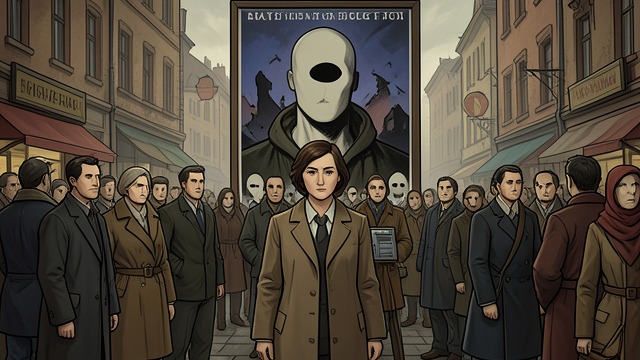
Keiko dies by suicide in Manchester, hanging herself in her room. Etsuko notes that English newspapers reduce the death to a claim about Japanese people and suicide, offering no account of Keiko as an individual.
The absent daughter
Niki did not attend the funeral, and she says she no longer remembers what Keiko looked like. Their distance makes the death a rupture in a family that was already divided.
The Closed Room
Withdrawal at Home
A guarded domain
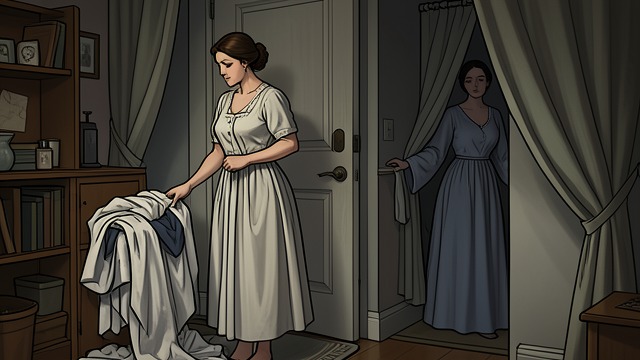
Keiko retreats to her bedroom, keeps the family out, and rarely joins them except to collect food. Her room fills with clothes and magazines, while Etsuko handles the laundry left outside the door.
Family accommodation
The others grow used to Keiko’s isolation, but her rare appearances often end in arguments. The household adapts to the withdrawal instead of finding a way to reach her.
A Room Left Behind
The Empty Bedroom
A charged threshold
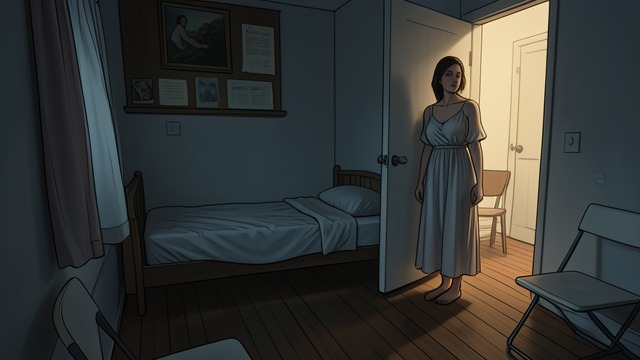
Niki asks to sleep in a different room because Keiko’s bedroom across the hall gives her an odd feeling. Etsuko responds coldly, though she too feels that the room holds a lingering presence.
The remembered image
Etsuko thinks of Keiko’s room in Manchester and wonders how long she lay undiscovered. The room at home is empty, but the memory of the death makes its emptiness feel haunted.
A Disturbing Image
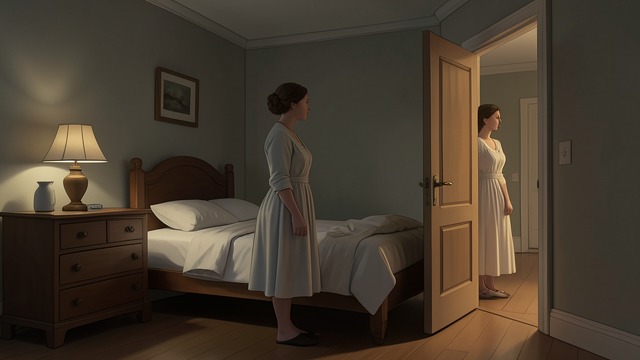
The Door Opens
A restless night
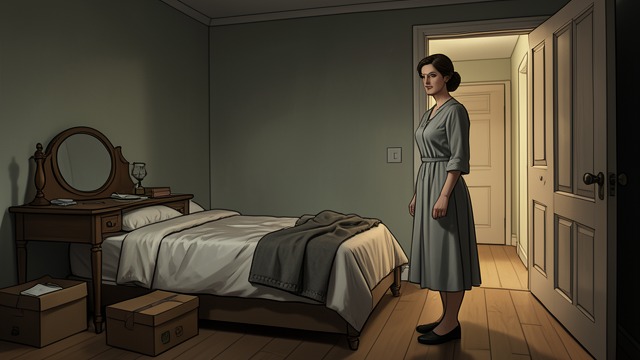
Etsuko wakes early and goes to Keiko’s room, where she finds the bed, dressing table, and boxes of belongings left behind. She listens for a sound that may not have existed before opening the door.
Contact with absence
The act does not reveal anything new about Keiko. It shows instead how the dead daughter remains present in the mother’s imagination, and how memory can turn an empty room into a scene of possible visitation.
A Confession to Niki
The Cost of Leaving
An admission
Niki suggests that Etsuko did everything she could for Keiko and that leaving Japan was the right choice. Etsuko answers that she knew Keiko would not be happy in England, but brought her there anyway.
Unresolved responsibility
Etsuko stops the discussion before Niki can make her account easier to bear. Her admission links the decision to emigrate with her lasting grief, without claiming that one choice alone explains Keiko’s death.
six years before Niki’s April visit
the years before Keiko leaves home
the fifth day of Niki’s visit
early morning after Niki asks to change rooms
the final morning of Niki’s visit
